harrison 1 130326

Cranial CT: 130 pathologies found quickly

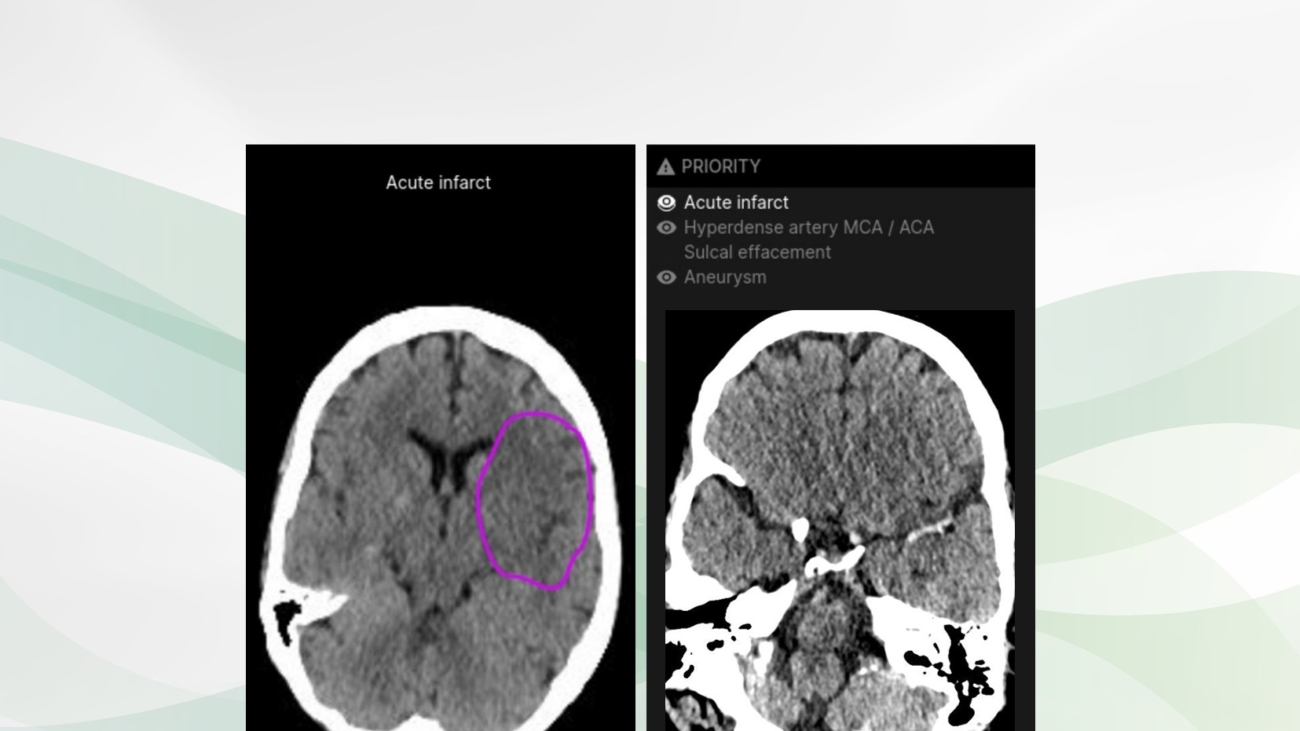
Non-enhanced cranial CT of a 61-year-old patient with acute right-sided hemisymptoms. Harrison Brain CT detects acute left parietal ischemia (left) and acute thrombosis of the middle cerebral artery (right). The pathologies are listed in a table and displayed directly in the CT images.

We need reliable AI assistants in neurology and traumatology. A new tool for native cranial CT helps detect acute and chronic lesions.

It is with great pleasure that we present Harrison CT Brain, an AI assistant for cranial CT studies.

How Harrison Brain CT works

The AI ​​assistant reports acute and chronic intracranial processes in native CT scans. The lesions are tabulated with emphasis on their acuity. Most pathologies, at least the acute ones, are drawn directly into the CT images as colored annotations.

Any medical professional can use Harrison CT Brain by quickly and easily uploading cranial CT studies to Radailogy.

Who benefits

Patients, clinicians and radiologists through the detailed listing of cranial pathologies with tables and the direct annotation in CT images.

Our own experience at Radailogy

In our first series of tests, we saw precise results, particularly in acute intracranial hemorrhages and fractures of the facial and cerebral skull. We found the distinction between acute and chronic parenchymal lesions encouraging. Our data on sensitivity and specificity of approximately 80% for acute bleeding were comparable to those of the available publications. The manufacturer’s list of 130 detectable pathologies needs to be verified in larger studies. The decision to use the AI ​​assistant as a triage tool in teleradiology also requires comprehensive data. We are currently conducting such a prospective study. We’ll keep you updated.

The scientific evidence

Hillis JM, Bizzo BC, Newbury‐Chaet I, Mercaldo SF, Chin JK, Ghatak A, Halle MA, L’Italien E, et al. Evaluation of an Artificial Intelligence Model for Identification of Intracranial Hemorrhage Subtypes on Computed Tomography of the Head. Stroke Vasc Interv Neurol. 2024 May 16;4(4):e001223

Data to upload to Radailogy

Non-enhanced cranial CT studies of any CT scanner for patients aged 18 and older; axial reformations; maximal slice thickness 1.5 mm; soft tissue reconstruction kernel

fx peripheral

The Great Reality Check: Fractures of the arms and legs

The Great Reality Check Part 5: Acute fractures of the arms and legs

Read the results of our new user studies – up-to-date and transparent!

Purpose:

The aim of the study was to prospectively assess the performance of a common AI assistant for fractures of the arms and legs, validated with the first read reports of radiologists specialized in emergency radiology as well as imaging and clinical follow-up.

Patients, Materials and Methods:

In late 2025, 140 patients (age: 18 to 81 years, mean: 42 years, standard deviation: ± 20 years) who had been referred to ERS Emergency Radiology Schueller, a provider of teleradiology services, for reporting radiographs of the peripheral skeleton due to suspected acute fracture of the arms or legs, were randomly and prospectively enrolled in the study over 12 consecutive weeks. The radiographs of these patients were evaluated using the AI assistant BoneView (Gleamer, Saint-Mandé, France). Radiologists reported the radiographs without the initial knowledge of the AI results and compared the radiological with the AI findings in a second step. Gold standard were the specialists´ reports as well as imaging and clinical follow-up. In case of discrepancies between the radiologists´ and the AI assistants´ findings, radiographs were second read within 30 minutes at the latest.

Results:

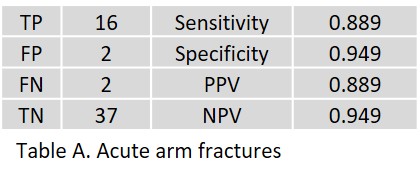
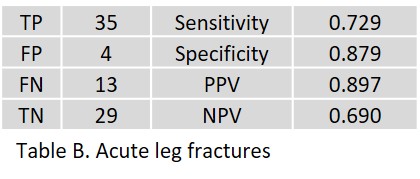
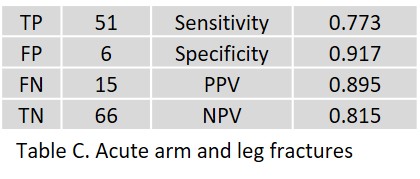
Of 140 patients, 2 AI results, one each of the arms and one of the legs, could not be retrieved. Radiologists and clinical follow-up diagnosed acute 66 fractures (47%) in 138 patients, including 18 arm fractures in 57 patients (31.5%; total 13%) and 48 leg fractures (59.2%; total 34%) in 81 patients. The results yielded by the AI assistant are given for fractures of the arms in Table A, for fractures of the legs in Table B. Table C shows the overall result; true positive (TP), false positive (FP), false negative (FN), and true negative (TN) in absolute numbers; sensitivity, specificity, positive predictive value (PPV), and negative predictive value (NPV) in percent.
In acute arm fractures, 2 FP of the proximal radius and the scaphoid were observed (ages 78 and 65 years, respectively). Two FN with minor radiolucency lines of the distal clavicle as well as the posterior circumference of the humeral head were observed, which were confirmed as fractures in radiological and clinical follow-up.

In acute leg fractures, 4 FP of the femoral neck, greater trochanter (age: 71 and 80 years, respectively), lateral tibial plateau (age: 52 years), and navicular bone (age: 76 years) were observed. Thirteen FNs included short, small avulsions of the talus (age 49 to 73 years), nondisplaced Weber A fractures of the distal fibula (age 28 to 46 years), a minimal fracture of the navicular bone (age 25 years), and a small subtrochanteric avulsion of the proximal femur (age 79 years).

Table C shows the overall result.


Discussion:

The AI ​​assistant yielded 15 FN (10.9%) and 6 FP (4.3%) out of 138 FP (27%) with significantly better performance on acute arm fractures (FN and FP 3.5% each) than on acute leg fractures (FN 16%, FP 4.9%). The overall result is therefore revised slightly downwards. The AI ​​assistant proved to be particularly reliable in the differential diagnosis of periarticular calcifications and joint effusions. Displaced fractures were consistently TP on the arms and legs. The specificity is slightly lower than the impressions we published on this platform on May 25, 2023. The high sensitivity is comparable (see https://www.radailogy.com/comprehensive-ai-fracture-diagnosis-of-the-peripheral-skeleton/). In summary, our study shows that the AI ​​assistant is of great use in acute fractures of the peripheral skeleton, especially the arms, in particular for the first review of the radiographs by trauma physicians. The AI ​​assistant can also be used successfully in teleradiology with the continued need for double-checking by experienced emergency radiologists.

Gerd Schueller and the Radailogy Team

acute abdominal organs 1

The Great Reality Check: Acute abdominal organs

The Great Reality Check Part 4: Acute abdominal organs

Read the results of our new user studies – up-to-date and transparent!

Purpose:

The aim of the study was to prospectively determine the performance of an AI assistant in acute abdominal organs, validated with the first read reports of radiologists specialized in emergency radiology as well as imaging and clinical follow-up.

Patients, Materials und Methods:

In 2025, 200 patients (age: 18 to 88 years, mean: 55 years, standard deviation: ± 15 years) who had been referred to ERS Emergency Radiology Schueller, a provider of teleradiology services, for abdominal CT scans due to suspected acute abdominal organ disease, were randomly and prospectively enrolled in the study over ten consecutive weeks. The CT scans of these patients were evaluated using the AI assistant xAID (Dover, DE, USA). The AI assistant offered assessments for acute cholecystitis, acute pancreatitis, acute appendicitis, and acute diverticulitis. Radiologists reported the CT studies without the initial knowledge of the AI results and compared the radiological with the AI findings in a second step. Gold standard were the specialists´ reports as well as imaging and clinical follow-up. In case of discrepancies between the radiologists´ and the AI assistants´ findings, CT studies were second read within 30 minutes at the latest.

Results:

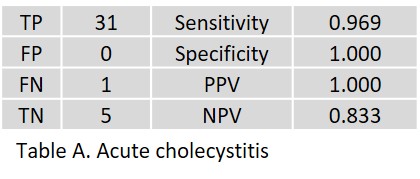
Of 200 patients, 54 AI results could not be retrieved. For 146 patients, radiologists and clinical follow-up diagnosed 31 patients with acute cholecystitis (21%), 30 with acute pancreatitis (20%), 25 with acute appendicitis (17%), and 15 with acute diverticulitis (10%). The results yielded by the AI assistant are given for acute cholecystitis in Table A, for acute pancreatitis in Table B, for acute appendictis in Table C, and for acute diverticulitis in Table D; true positive (TP), false positive (FP), false negative (FN), and true negative (TN) in absolute numbers; sensitivity, specificity, positive predictive value (PPV), and negative predictive value (NPV) in percent.

In acute cholecystitis, one FN resulted from a marked hydrops and gallbladder wall thickening, which was confirmed surgically and histologically.
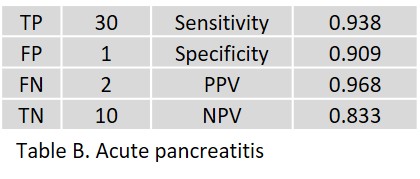
In acute pancreatitis, one FP was observed without any positive imaging signs. Two FN occurred in patients with CT signs of an onset acute pancreatitis.
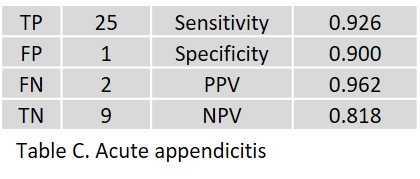
In acute appendicitis, one FP was detected in a radiologically and clinically negative case. The two FN were significantly underestimated despite the clearly positive CT scan and clinical symptoms.
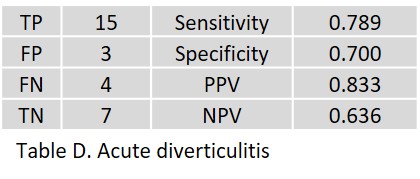
In acute diverticulitis, two FP occurred as a result of misinterpretation of reactive inflammation of the mesentery in acute cholecystitis. One FP occurred in a patient with severe pancolitis (inflammatory bowel disease) that differed significantly from diverticulitis clinically, pathologically, histologically, and radiologically. All four false-negative findings were located in the left colon.
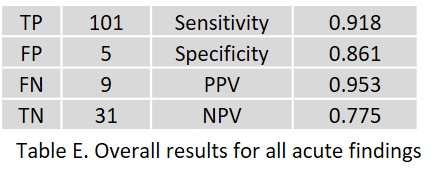


Table E shows the overall results for all acute pathologies.


For patients in a state-of-the-art teleradiology setting, the probability of a positive CT scan for an acute abdominal organ disease is usually high.

Therefore, as a second step, the complexity of acute abdomina in both, the clinical presentation as well as CT imaging, was addressed. Here, the AI results were not only regarded as Yes/No answers, but rather considered results triggering treatment. In nine patients, the AI assistant revealed more than one positive result. The results regarding any critical false positive or false negative differential diagnoses are shown in Tables F to I.
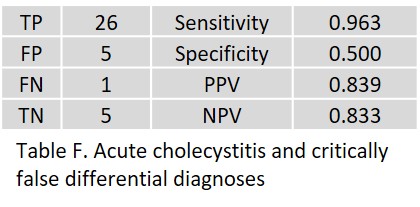
In particular, one patient with acute appendicitis was FP, as were two patients with acute pancreatitis.
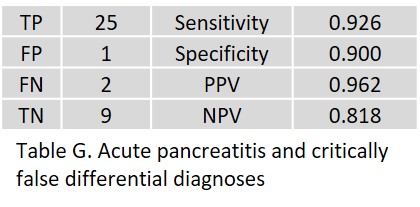
 

Acute appendicitis was FP in two patients.
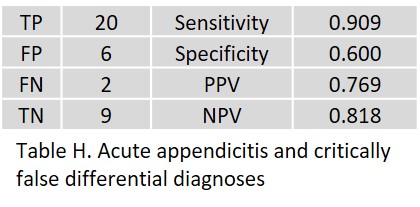


Here, the FP differential diagnoses do not matter that much, since these patients undergo surgery anyway.
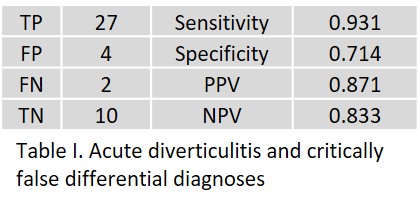
Notably, acute appendicitis was FP in one patient.
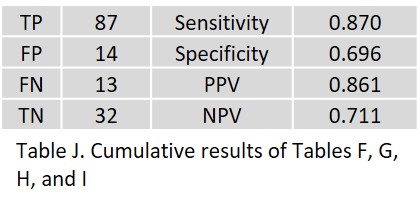


The overall result shown in Table J is obtained by summing the respective organ results.


Discussion:

To our knowledge, our study is the first to examine abdominal CT and AI in the context of acute abdominal organ diseases. Compared to physicians, AI developers tend to take a more pragmatic approach to pattern recognition, segmentation, and description of abdominal organs. This AI ​​assistant divides the abdominal cavity primarily based on four main criteria. While such algorithms may prove suitable for delineating a single parameter, such as a single organ, the lack of human sensitivity to the overall picture becomes particularly evident in cases of the acute abdomen. Especially in cases of acute cholecystitis and acute appendicitis, the results worsen when the AI ​​assistant is used to stratify treatment options. In acute appendicitis, the reasons may also include the often unusual location of the appendix, especially in complicated abdominal cases, which corresponds to the most common situation in teleradiology. It is important to be aware that an AI assistant is not able to depict the course of an acute abdominal illness, as CT patterns can change from local inflammation to regional phlegmon to diffuse peritonitis and perforation.

In summary, the results of the AI assistant are promising. This study underscores the urgent need for ongoing and competent collaboration between radiologists and software developers to create clinically relevant, powerful AI assistants.

Gerd Schueller and the Radailogy Team

urolith 1

The Great Reality Check: Urolithiasis

The Great Reality Check Part 3: Urolithiasis

Read the results of our new user studies – up-to-date and transparent!

Purpose:

The aim of the study was to prospectively determine the performance of a common AI assistant in urolithiasis, validated with the first read reports of radiologists specialized in emergency radiology as well as imaging and clinical follow-up.

Patients, Materials and Methods:

In late 2025, 104 patients (age: 18 to 90 years, mean: 44 years, standard deviation: ± 19 years) who had been referred to ERS Emergency Radiology Schueller, a provider of teleradiology services, for abdominal CT scans due to suspected urolithiasis, were randomly and prospectively enrolled in the study over six consecutive weeks. CT studies of these patients were evaluated by a common, commercially available AI assistant (xAID, Dover, DE, USA). Radiologists reported the CT studies without the initial knowledge of the AI results and compared the radiological with the AI findings in a second step. Gold standard were the specialists´ reports as well as imaging and clinical follow-up. In case of discrepancies between the radiologists´ and the AI assistants´ findings, CT studies were second read within 30 minutes at the latest.

Results:

Of 104 patients, 19 AI results could not be retrieved. For 85 patients, radiologists and clinical follow-up diagnosed 46 calculi of the urinary tract, which were considered by consensus to be the cause of the acute symptoms (54.1%). The AI assistant yielded 46 true positive (TP), 1 false positive (FP), 15 false negative (FN), and 23 true negative (TN) results; sensitivity 0.754; specificity 0.958; positive predictive value (PPV) 0.979; negative predictive value (NPV) 0.605. In one case, a bladder catheter was mistaken for a calculus. The calculus size of 22 FN ranged up to 4.4 mm, and in one FN it was 7 mm. The location of the FN along the urinary tract showed no statistical significance.

Discussion:

The AI ​​assistant yielded 15 out of 85 FP (27%), which suggests that the software company, likely aware of the challenging description of calculi equal to or less than 4 mm, accepts FN in favor of specificity. At least phleboliths frequently found in the pelvis were not misinterpreted, and the FP rate is comparable to the results we published on this platform on March 28, 2025 (compare https://www.radailogy.com/detect-kidney-stones-quickly-and-reliably/). In comparison to the manufacturer’s publications (see also: De Perrot T et al., Eur Radiol 2019), the remaining statistical data deviate to the disadvantage of our current study. Our study shows that the AI ​​assistant for urolithiasis can be successfully used for stones from approximately 4.5 mm, also in teleradiology with the continued need for double-checking by experienced emergency radiologists.

Gerd Schueller and the Radailogy Team