harrison 1 130326

Cranial CT: 130 pathologies found quickly

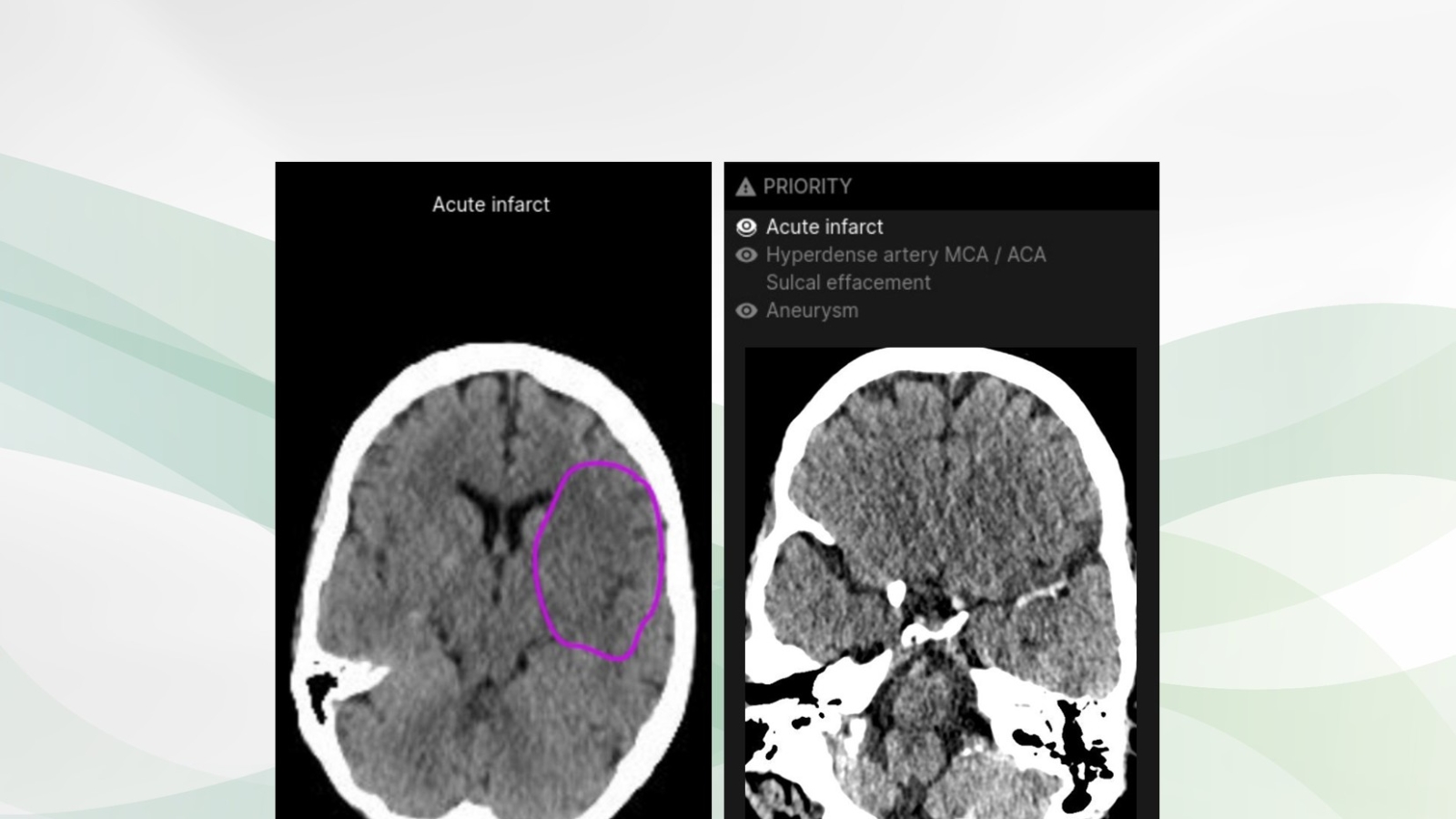
Non-enhanced cranial CT of a 61-year-old patient with acute right-sided hemisymptoms. Harrison Brain CT detects acute left parietal ischemia (left) and acute thrombosis of the middle cerebral artery (right). The pathologies are listed in a table and displayed directly in the CT images.

We need reliable AI assistants in neurology and traumatology. A new tool for native cranial CT helps detect acute and chronic lesions.

It is with great pleasure that we present Harrison CT Brain, an AI assistant for cranial CT studies.

How Harrison Brain CT works

The AI ​​assistant reports acute and chronic intracranial processes in native CT scans. The lesions are tabulated with emphasis on their acuity. Most pathologies, at least the acute ones, are drawn directly into the CT images as colored annotations.

Any medical professional can use Harrison CT Brain by quickly and easily uploading cranial CT studies to Radailogy.

Who benefits

Patients, clinicians and radiologists through the detailed listing of cranial pathologies with tables and the direct annotation in CT images.

Our own experience at Radailogy

In our first series of tests, we saw precise results, particularly in acute intracranial hemorrhages and fractures of the facial and cerebral skull. We found the distinction between acute and chronic parenchymal lesions encouraging. Our data on sensitivity and specificity of approximately 80% for acute bleeding were comparable to those of the available publications. The manufacturer’s list of 130 detectable pathologies needs to be verified in larger studies. The decision to use the AI ​​assistant as a triage tool in teleradiology also requires comprehensive data. We are currently conducting such a prospective study. We’ll keep you updated.

The scientific evidence

Hillis JM, Bizzo BC, Newbury‐Chaet I, Mercaldo SF, Chin JK, Ghatak A, Halle MA, L’Italien E, et al. Evaluation of an Artificial Intelligence Model for Identification of Intracranial Hemorrhage Subtypes on Computed Tomography of the Head. Stroke Vasc Interv Neurol. 2024 May 16;4(4):e001223

Data to upload to Radailogy

Non-enhanced cranial CT studies of any CT scanner for patients aged 18 and older; axial reformations; maximal slice thickness 1.5 mm; soft tissue reconstruction kernel

fx peripheral

The Great Reality Check: Fractures of the arms and legs

The Great Reality Check Part 5: Acute fractures of the arms and legs

Read the results of our new user studies – up-to-date and transparent!

Purpose:

The aim of the study was to prospectively assess the performance of a common AI assistant for fractures of the arms and legs, validated with the first read reports of radiologists specialized in emergency radiology as well as imaging and clinical follow-up.

Patients, Materials and Methods:

In late 2025, 140 patients (age: 18 to 81 years, mean: 42 years, standard deviation: ± 20 years) who had been referred to ERS Emergency Radiology Schueller, a provider of teleradiology services, for reporting radiographs of the peripheral skeleton due to suspected acute fracture of the arms or legs, were randomly and prospectively enrolled in the study over 12 consecutive weeks. The radiographs of these patients were evaluated using the AI assistant BoneView (Gleamer, Saint-Mandé, France). Radiologists reported the radiographs without the initial knowledge of the AI results and compared the radiological with the AI findings in a second step. Gold standard were the specialists´ reports as well as imaging and clinical follow-up. In case of discrepancies between the radiologists´ and the AI assistants´ findings, radiographs were second read within 30 minutes at the latest.

Results:

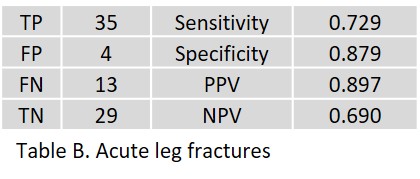
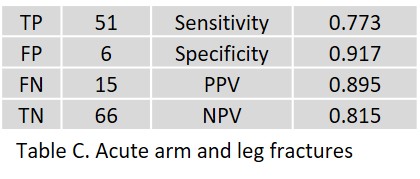
Of 140 patients, 2 AI results, one each of the arms and one of the legs, could not be retrieved. Radiologists and clinical follow-up diagnosed acute 66 fractures (47%) in 138 patients, including 18 arm fractures in 57 patients (31.5%; total 13%) and 48 leg fractures (59.2%; total 34%) in 81 patients. The results yielded by the AI assistant are given for fractures of the arms in Table A, for fractures of the legs in Table B. Table C shows the overall result; true positive (TP), false positive (FP), false negative (FN), and true negative (TN) in absolute numbers; sensitivity, specificity, positive predictive value (PPV), and negative predictive value (NPV) in percent.
In acute arm fractures, 2 FP of the proximal radius and the scaphoid were observed (ages 78 and 65 years, respectively). Two FN with minor radiolucency lines of the distal clavicle as well as the posterior circumference of the humeral head were observed, which were confirmed as fractures in radiological and clinical follow-up.

In acute leg fractures, 4 FP of the femoral neck, greater trochanter (age: 71 and 80 years, respectively), lateral tibial plateau (age: 52 years), and navicular bone (age: 76 years) were observed. Thirteen FNs included short, small avulsions of the talus (age 49 to 73 years), nondisplaced Weber A fractures of the distal fibula (age 28 to 46 years), a minimal fracture of the navicular bone (age 25 years), and a small subtrochanteric avulsion of the proximal femur (age 79 years).

Table C shows the overall result.


Discussion:

The AI ​​assistant yielded 15 FN (10.9%) and 6 FP (4.3%) out of 138 FP (27%) with significantly better performance on acute arm fractures (FN and FP 3.5% each) than on acute leg fractures (FN 16%, FP 4.9%). The overall result is therefore revised slightly downwards. The AI ​​assistant proved to be particularly reliable in the differential diagnosis of periarticular calcifications and joint effusions. Displaced fractures were consistently TP on the arms and legs. The specificity is slightly lower than the impressions we published on this platform on May 25, 2023. The high sensitivity is comparable (see https://www.radailogy.com/comprehensive-ai-fracture-diagnosis-of-the-peripheral-skeleton/). In summary, our study shows that the AI ​​assistant is of great use in acute fractures of the peripheral skeleton, especially the arms, in particular for the first review of the radiographs by trauma physicians. The AI ​​assistant can also be used successfully in teleradiology with the continued need for double-checking by experienced emergency radiologists.

Gerd Schueller and the Radailogy Team

acute abdominal organs 1

The Great Reality Check: Acute abdominal organs

The Great Reality Check Part 4: Acute abdominal organs

Read the results of our new user studies – up-to-date and transparent!

Purpose:

The aim of the study was to prospectively determine the performance of an AI assistant in acute abdominal organs, validated with the first read reports of radiologists specialized in emergency radiology as well as imaging and clinical follow-up.

Patients, Materials und Methods:

In 2025, 200 patients (age: 18 to 88 years, mean: 55 years, standard deviation: ± 15 years) who had been referred to ERS Emergency Radiology Schueller, a provider of teleradiology services, for abdominal CT scans due to suspected acute abdominal organ disease, were randomly and prospectively enrolled in the study over ten consecutive weeks. The CT scans of these patients were evaluated using the AI assistant xAID (Dover, DE, USA). The AI assistant offered assessments for acute cholecystitis, acute pancreatitis, acute appendicitis, and acute diverticulitis. Radiologists reported the CT studies without the initial knowledge of the AI results and compared the radiological with the AI findings in a second step. Gold standard were the specialists´ reports as well as imaging and clinical follow-up. In case of discrepancies between the radiologists´ and the AI assistants´ findings, CT studies were second read within 30 minutes at the latest.

Results:

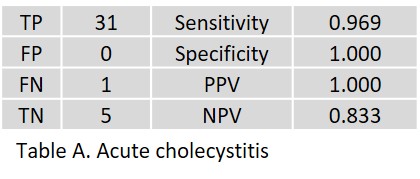
Of 200 patients, 54 AI results could not be retrieved. For 146 patients, radiologists and clinical follow-up diagnosed 31 patients with acute cholecystitis (21%), 30 with acute pancreatitis (20%), 25 with acute appendicitis (17%), and 15 with acute diverticulitis (10%). The results yielded by the AI assistant are given for acute cholecystitis in Table A, for acute pancreatitis in Table B, for acute appendictis in Table C, and for acute diverticulitis in Table D; true positive (TP), false positive (FP), false negative (FN), and true negative (TN) in absolute numbers; sensitivity, specificity, positive predictive value (PPV), and negative predictive value (NPV) in percent.

In acute cholecystitis, one FN resulted from a marked hydrops and gallbladder wall thickening, which was confirmed surgically and histologically.
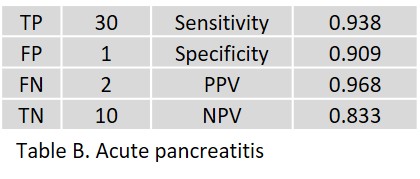
In acute pancreatitis, one FP was observed without any positive imaging signs. Two FN occurred in patients with CT signs of an onset acute pancreatitis.
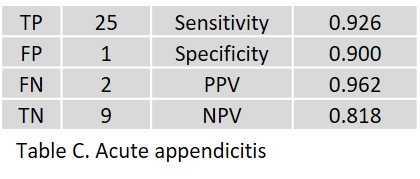
In acute appendicitis, one FP was detected in a radiologically and clinically negative case. The two FN were significantly underestimated despite the clearly positive CT scan and clinical symptoms.
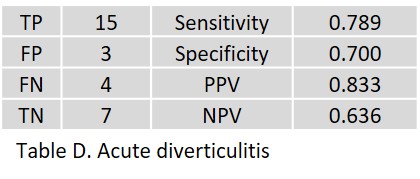
In acute diverticulitis, two FP occurred as a result of misinterpretation of reactive inflammation of the mesentery in acute cholecystitis. One FP occurred in a patient with severe pancolitis (inflammatory bowel disease) that differed significantly from diverticulitis clinically, pathologically, histologically, and radiologically. All four false-negative findings were located in the left colon.
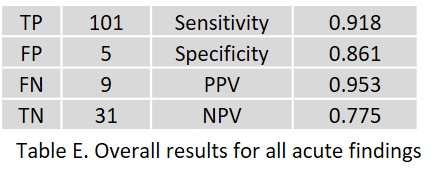


Table E shows the overall results for all acute pathologies.


For patients in a state-of-the-art teleradiology setting, the probability of a positive CT scan for an acute abdominal organ disease is usually high.

Therefore, as a second step, the complexity of acute abdomina in both, the clinical presentation as well as CT imaging, was addressed. Here, the AI results were not only regarded as Yes/No answers, but rather considered results triggering treatment. In nine patients, the AI assistant revealed more than one positive result. The results regarding any critical false positive or false negative differential diagnoses are shown in Tables F to I.
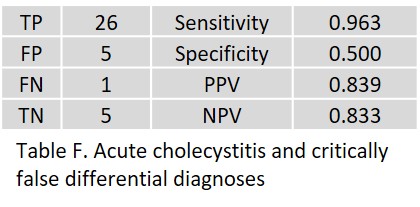
In particular, one patient with acute appendicitis was FP, as were two patients with acute pancreatitis.
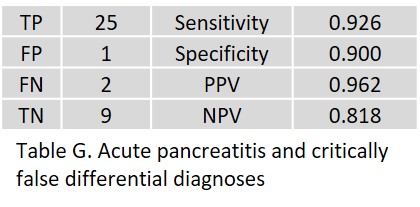
 

Acute appendicitis was FP in two patients.
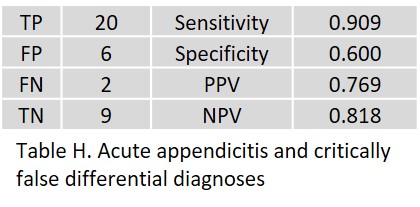


Here, the FP differential diagnoses do not matter that much, since these patients undergo surgery anyway.
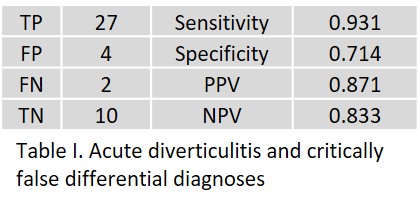
Notably, acute appendicitis was FP in one patient.
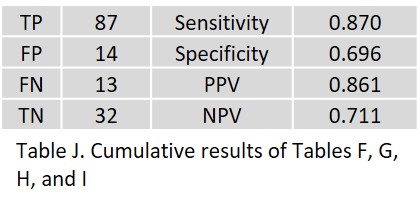


The overall result shown in Table J is obtained by summing the respective organ results.


Discussion:

To our knowledge, our study is the first to examine abdominal CT and AI in the context of acute abdominal organ diseases. Compared to physicians, AI developers tend to take a more pragmatic approach to pattern recognition, segmentation, and description of abdominal organs. This AI ​​assistant divides the abdominal cavity primarily based on four main criteria. While such algorithms may prove suitable for delineating a single parameter, such as a single organ, the lack of human sensitivity to the overall picture becomes particularly evident in cases of the acute abdomen. Especially in cases of acute cholecystitis and acute appendicitis, the results worsen when the AI ​​assistant is used to stratify treatment options. In acute appendicitis, the reasons may also include the often unusual location of the appendix, especially in complicated abdominal cases, which corresponds to the most common situation in teleradiology. It is important to be aware that an AI assistant is not able to depict the course of an acute abdominal illness, as CT patterns can change from local inflammation to regional phlegmon to diffuse peritonitis and perforation.

In summary, the results of the AI assistant are promising. This study underscores the urgent need for ongoing and competent collaboration between radiologists and software developers to create clinically relevant, powerful AI assistants.

Gerd Schueller and the Radailogy Team

urolith 1

The Great Reality Check: Urolithiasis

The Great Reality Check Part 3: Urolithiasis

Read the results of our new user studies – up-to-date and transparent!

Purpose:

The aim of the study was to prospectively determine the performance of a common AI assistant in urolithiasis, validated with the first read reports of radiologists specialized in emergency radiology as well as imaging and clinical follow-up.

Patients, Materials and Methods:

In late 2025, 104 patients (age: 18 to 90 years, mean: 44 years, standard deviation: ± 19 years) who had been referred to ERS Emergency Radiology Schueller, a provider of teleradiology services, for abdominal CT scans due to suspected urolithiasis, were randomly and prospectively enrolled in the study over six consecutive weeks. CT studies of these patients were evaluated by a common, commercially available AI assistant (xAID, Dover, DE, USA). Radiologists reported the CT studies without the initial knowledge of the AI results and compared the radiological with the AI findings in a second step. Gold standard were the specialists´ reports as well as imaging and clinical follow-up. In case of discrepancies between the radiologists´ and the AI assistants´ findings, CT studies were second read within 30 minutes at the latest.

Results:

Of 104 patients, 19 AI results could not be retrieved. For 85 patients, radiologists and clinical follow-up diagnosed 46 calculi of the urinary tract, which were considered by consensus to be the cause of the acute symptoms (54.1%). The AI assistant yielded 46 true positive (TP), 1 false positive (FP), 15 false negative (FN), and 23 true negative (TN) results; sensitivity 0.754; specificity 0.958; positive predictive value (PPV) 0.979; negative predictive value (NPV) 0.605. In one case, a bladder catheter was mistaken for a calculus. The calculus size of 22 FN ranged up to 4.4 mm, and in one FN it was 7 mm. The location of the FN along the urinary tract showed no statistical significance.

Discussion:

The AI ​​assistant yielded 15 out of 85 FP (27%), which suggests that the software company, likely aware of the challenging description of calculi equal to or less than 4 mm, accepts FN in favor of specificity. At least phleboliths frequently found in the pelvis were not misinterpreted, and the FP rate is comparable to the results we published on this platform on March 28, 2025 (compare https://www.radailogy.com/detect-kidney-stones-quickly-and-reliably/). In comparison to the manufacturer’s publications (see also: De Perrot T et al., Eur Radiol 2019), the remaining statistical data deviate to the disadvantage of our current study. Our study shows that the AI ​​assistant for urolithiasis can be successfully used for stones from approximately 4.5 mm, also in teleradiology with the continued need for double-checking by experienced emergency radiologists.

Gerd Schueller and the Radailogy Team
stroke 1

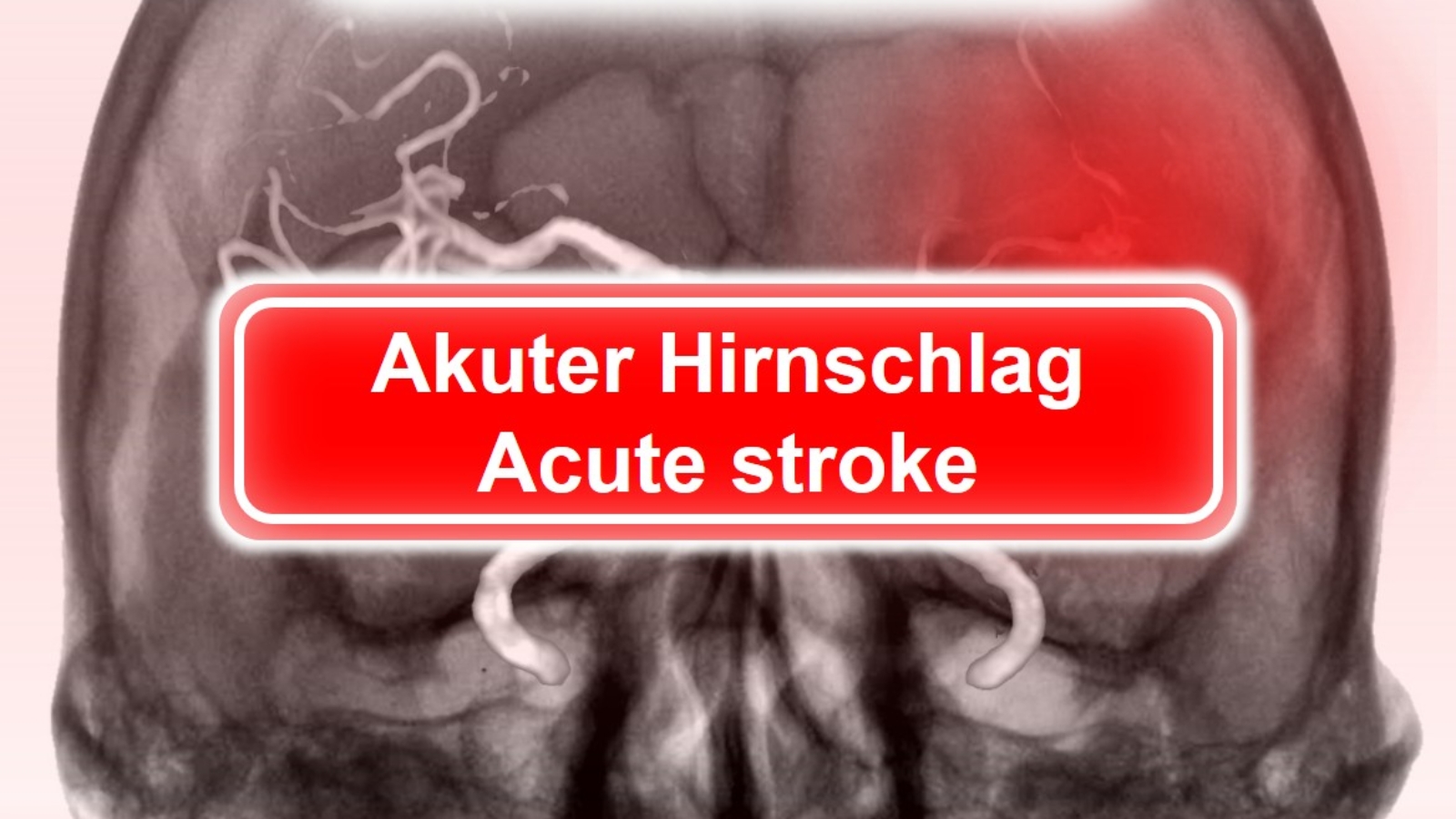
The Great Reality Check: Acute stroke

The Great Reality Check Part 2: Acute Stroke

Read the results of our new user studies – up-to-date and transparent!

Purpose:

The aim of the study was to prospectively determine the performance of a common AI assistant in acute stroke, validated with the first read reports of radiologists specialized in emergency radiology as well as imaging and clinical follow-up.

Patients, Material and Methods:

In 2025, 88 patients (age: 18 to 89 years, mean: 52 years, standard deviation: ± 25 years) who had been referred to ERS Emergency Radiology Schueller, a provider of teleradiology services, for cranial CT scans with suspected acute stroke were randomly and prospectively enrolled in the study over three consecutive weeks. CT studies of these patients were evaluated by a common, commercially available AI assistant. Radiologists reported the CT studies without the initial knowledge of the AI results and compared the radiological with the AI findings in a second step. Gold standard were the specialists´ reports as well as clinical follow-up. In case of discrepancies between the radiologists´ and the AI assistants´ findings, CT studies were second read within 30 minutes at the latest. The study was prematurely terminated due to the AI results.

Results:

Of 88 patients, 14 AI results could not be retrieved. Of 74 patients, radiologists and clinical follow-up diagnosed 2 acute ischemia (2.7%). The AI assistant yielded 2 true positive (TP), 58 false positive (FP), 0 false negative (FN), and 14 true negative (TN) results; sensitivity 1.0; specificity 0.194; positive predictive value (PPV) 0.033; negative predictive value (NPV) 1.0. In a second step, the results of the AI ​​assistant were calculated based on the clinically and therapeutically relevant threshold of the ASPECTS score of 7 or lower: The AI assistant yielded 2 TP, 32 FP, 0 FN, and 14 TN results; sensitivity 1.0; specificity 0.304; PPV 0.059; NPV 1.0.

Discussion:

The AI ​​assistant achieved 58 out of 74 FP (78%) and two out of 74 TP (2.7%). This rate, along with the absence of FN, suggests that the software company is accepting FP in favor of sensitivity. The calculated specificity is significantly lower than officially stated in the AI ​​manufacturer’s publications. Evaluation based on the clinically and therapeutically relevant threshold of the ASPECTS score 7 yielded a similar result. Data collection was terminated prematurely, and the low number of cases achieved certainly represents a limitation of our study. Based on the available data, it must be assumed that reporting CT scans for acute stroke, with its complexity, especially with pre-existing, non-acute lesions of brain tissue, particularly in older patients, should for the time being remain entirely in the hands of experienced radiologists.

Gerd Schueller and the Radailogy Team
icb 1

The Great Reality Check: Acute cerebral hemorrhage

The Great Reality Check Part 1: Acute cerebral hemorrhage

Read the results of our new user studies – up-to-date and transparent!

Purpose:

The aim of the study was to prospectively determine the performance of common AI assistants in acute cerebral hemorrhage, validated with the first read reports of radiologists specialized in emergency radiology as well as imaging and clinical follow-up.

Patients, Materials and Methods:

In 2025, 218 patients who had been referred to ERS Emergency Radiology Schueller, a provider of teleradiology services, for cranial CT scans following blunt head trauma were randomly and prospectively enrolled in the study over eight consecutive weeks. CT studies of these patients were randomly evaluated by one of two common, commercially available AI assistants. Radiologists reported the CT studies without the initial knowledge of the AI results and compared the radiological with the AI findings in a second step. Gold standard were the specialists´ reports as well as clinical follow-up. In case of discrepancies between the radiologists´ and the AI assistants´ findings, CT studies were second read within 30 minutes at the latest.

Results:

Of 218 patients, 18 AI results could not be retrieved. Of 200 patients, radiologists and clinical follow-up diagnosed 58 acute intracranial bleedings (29%). The AI assistants yielded 58 true positive (TP), 0 false positive (FP), 40 false negative (FN), and 82 true negative (TN) results; sensitivity .592; specificity 1.0; positive predictive value (PPV) 1.0; negative predictive value (NPV) .672. No significant difference was found between the results of the AI assistants used. FN findings involved hemorrhages with a width of 5 mm or less (mean 3.5 mm, SE ± 1.9 mm). The minimum extent of a hemorrhage classified as TP by the AI assistants was 5 mm (range 5–15 mm; mean, 9 mm; SE ± 7 mm).

Discussion:

The AI assistants correctly identified all acute cerebral hemorrhages. The absence of FP results suggests that typical pitfalls, such as hardening artifacts, bone margins, and calcifications along the intern table, have been addressed by the software companies. However, the surprisingly high FN rate suggests that AI assistants are currently non suitable for triaging patients with traumatic brain injury in the high-end setting of professional teleradiology. The high FN rate, particularly for smaller hemorrhages, also casts doubt on their use as a second look in the hectic daily routine of acute radiology. Our data are not comparable to the official figures provided by AI manufacturers, who published sensitivity and specificity figures of at least 90%. Certainly, the relatively small sample size of our study contributes to this discrepancy as a limitation. Furthermore, future studies should test a larger number of AI assistants.

Gerd Schueller and the Radailogy Team
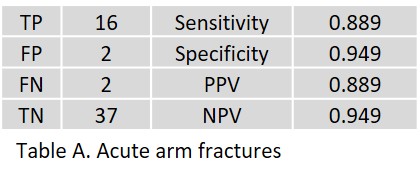
Bild3

The Great Reality Check

March 2026: How suitable is Artificial Intelligence really in acute medicine?

March 2026: How suitable is Artificial Intelligence really in acute medicine?

Read the results of our extensive AI field test in time for ECR 2026. At Radailogy, we publish our cutting-edge empirical data with complete transparency and without influence from any stakeholders.

The aim of our study was to evaluate the practical applicability of common AI assistants for the detection of frequent pathologies in acute care. We generated our data prospectively using a randomized trial in collaboration with our sister company ERS Emergency Radiology Schueller, the market leader in teleradiology in Austria and Switzerland.

Publications:

February 27, 2026: Acute cerebral hemorrhage

February 28, 2026: Acute stroke

March 2, 2026: Urolithiasis

March 3, 2026: Acute abdominal organs

March 4, 2026: Fractures of the arms and legs

Book your free spot for ERS TV Live!

In addition, all data will be presented live in our ERS TV show on March 10, 2026. Secure your free spot! You’ll find the registration link on Monday, March 2, 2026, at www.emergencyradiology.ch

We look forward to seeing you there. It’s going to be exciting.

Yours sincerely,

Gerd Schueller

Coreline AI assistant

Smoking: Can you see anything in your lungs?

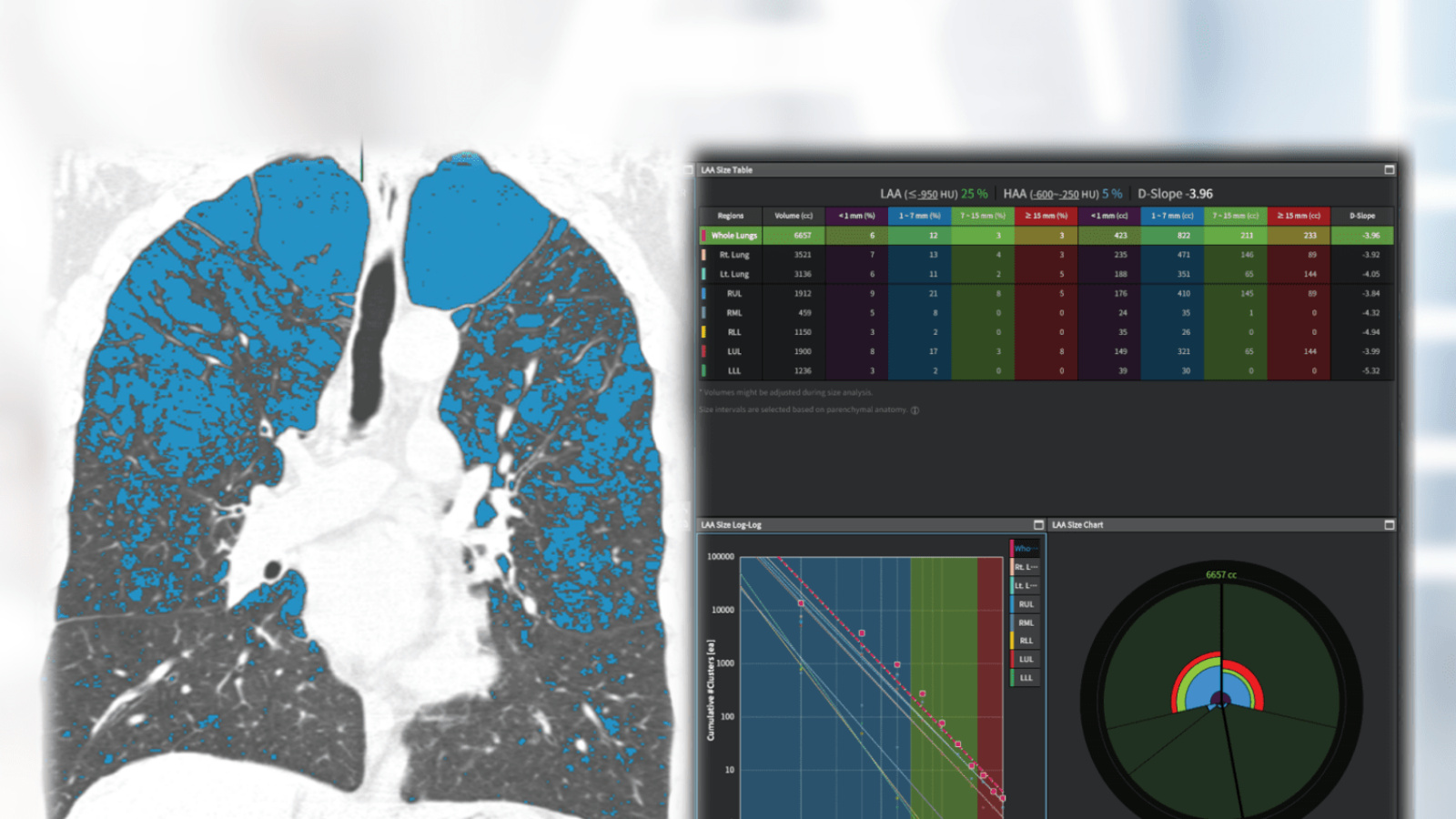
Non-enhanced low-dose chest CT of a patient with COPD. MPR visualization of lung anatomy and emphysema clusters (left) and detailed charts and graphs (right). The absolute volumina and the relative low attenuation volumina (25%) were given for both lungs as well as for each lobe. aview COPD calculated the D-slope as -3.96. This value is considered the diameter of the emphysema clusters plotted against the cumulative number of lesions on a log–log scale. The slope of these linear relationships is calculated, with a steeper slope indicating a smaller emphysema size.

Smokers know that smoking can have serious health consequences. Chronic coughing, mucus buildup, and shortness of breath are already disease symptoms. CT scans are highly predictive of chronic lung damage. But how exactly can this damage be seen? Our new AI assistant helps!

It is with great pleasure that we present aview COPD, an AI assistant for the detection and detailed description of chronic lung diseases in CT studies.

Why aview COPD matters and how it works

The AI assistant classifies and quantitatively analyses two COPD phenotypes, i.e., the airway type and the emphysema type. This automatic segmentation software provides expedite analysis and visualization of the lungs, the lung lobes as well as the pulmonary airways and blood vessels. Functional and pathological lung volumes are precisely calculated. The results are presented through 2D and 3D images, intuitive charts and detailed graphs. An important key feature is the tracking of disease in follow up CT studies. Hence, aview COPD may serve as an imaging biomarker of diagnosis and lung function.

Not only physicians, but also smokers themselves get a clear impression of any pathological lung changes.

Why benefits

In particular, smokers themselves as well as clinicians and radiologists benefit from the detailed presentation and calculation of the lungs with comprehensive data and images.

Our own experience at Radailogy

Coreline reports the AI assistant´s analysis agreement for emphysema, airway and air trapping as 99%, 96% and 99%, respectively. aview COPD offers a variety of MPR images, diagrams and graphs to illustrate the pulmonary anatomy and disease as well as the distribution pattern of COPD. An interesting feature is the analysis and depiction of emphysema clusters using the D-slope value by applying a three-dimensional size-based emphysema clustering technique. For the calculation of D-slope, the diameter of the emphysema cluster is plotted against the cumulative number of lesions on a log–log scale. The slope (D-slope) of these linear relationships is calculated, with a steeper slope (increase in absolute D value) indicating a smaller emphysema size. The airway and lung vessel segmentation, the morphology and pathology of the airway walls and diameter are shown by 3D images and detailed tables. In our opinion, the fissure analysis is of limited help. Overall, the visualized contents enhance the understanding of pulmonary morphology and pathology.

Anyone can use aview COPD by quickly and easily uploading lung CT scans to Radailogy.

We also evaluated aview COPD together with aview LCS and aview ILA, which were developed to detect and quantify pulmonary nodules and evaluate the entire lung structure in CT studies. Find out more in our AI assistant menu!

The scientific evidence

Hwang HJ, Lee SM, Seo JB, Lee JS, Kim N, Lee SW, Oh YM. New Method for Combined Quantitative Assessment of Air-Trapping and Emphysema on Chest Computed Tomography in Chronic Obstructive Pulmonary Disease: Comparison with Parametric Response Mapping. Korean J Radiol. 2021 Oct;22(10):1719-1729.

Hwang HJ, Seo JB, Lee SM, Kim N, Yi J, Lee JS, Lee SW, Oh YM, Lee SD. Visual and Quantitative Assessments of Regional Xenon-Ventilation Using Dual-Energy CT in Asthma-Chronic Obstructive Pulmonary Disease Overlap Syndrome: A Comparison with Chronic Obstructive Pulmonary Disease. Korean J Radiol. 2020 Sep;21(9):1104-1113.

Data to upload to Radailogy

Non-enhanced low-dose chest CT studies of any CT scanner; axial reformations; slice thickness and interval 1.0 mm each; lung reconstruction kernel

mediaire AI assistant

Prostate MRI: making treatment decisions with the help of advanced AI

MRI of the prostate of a 59-year-old patient with a Gleason score of 4. T2 hypointensity in the peripheral zone on the left with corresponding hyperintense DWI signal and elevated ADC values (not shown). The lesion is detected by mdprostate, scored as PI-RADS 5, and displayed in 3D images (axial, lower left; coronal, middle; sagittal, right). The volume is calculated to be 2.7ml, the dimensions are 17 x 13.3 x 24mm. Histopathology confirmed the lesion malignant.

Men often hear that prostate cancer is very common. Only radiologists with extensive experience in oncology are able to distinguish between benign and malignant lesions. And if the findings are inconclusive, is there any useful support available? Yes, there is!

We are pleased to present mdprostate, an AI assistant for the detection and analysis of prostate tumors in MR studies.

Why mdprostate matters and how it works

In brief: prostate tumors are localized, measured, and evaluated using the PI-RADS 2.1 classification system. The results are presented in three-dimensional color graphics and clear tables. The automated comparison with preliminary studies is particularly interesting.

Who benefits

Any man seeking a second opinion. And, of course, clinicians and radiologists benefit from the detailed presentation of prostate tumors with clear images and tables.

Our own experience at Radailogy

Our tests revealed a high TP rate of >80% and a TN rate of >85%. The sensitivity in our sample was 87%, and the specificity was 69%. The score is based on the PI-RADS 2.1 classification. mdprostate also calculates prostate volume. We were impressed by the detailed depiction of the prostate with comprehensive tables and 3D images.

Any man can request an AI-assisted second opinion for his prostate MRI by quickly and easily uploading prostate MRI studies to Radailogy. Our telemedicine clients also use this AI assistant as a standard in their daily practice to optimize their oncology workflow.

The scientific evidence

Bayerl N, Adams LC, Cavallaro A, Bäuerle T, Schlicht M, Wullich B, Hartmann A, Uder M, Ellmann S. Assessment of a fully-automated diagnostic AI software in prostate MRI: Clinical evaluation and histopathological correlation. Eur J Radiol. 2024 Dec;181:111790

Data to upload to Radailogy

1.5-3.0 Tesla; T2w SE: FOV 10-12mm; imaging resolution 0.7-0.9mm; slice thickness 3-4mm; interval <0.5mm; DWI: b value 1400-2000; FOV 14-16mm; imaging resolution 2.1-2.5mm; slice thickness 3-4mm; interval <0.5mm; ADC: ; FOV 14-16mm; imaging resolution 2.1-2.5mm; slice thickness 3-4mm; interval <0.5mm

xAID Abdomen AI assistant

Detect kidney stones quickly and reliably

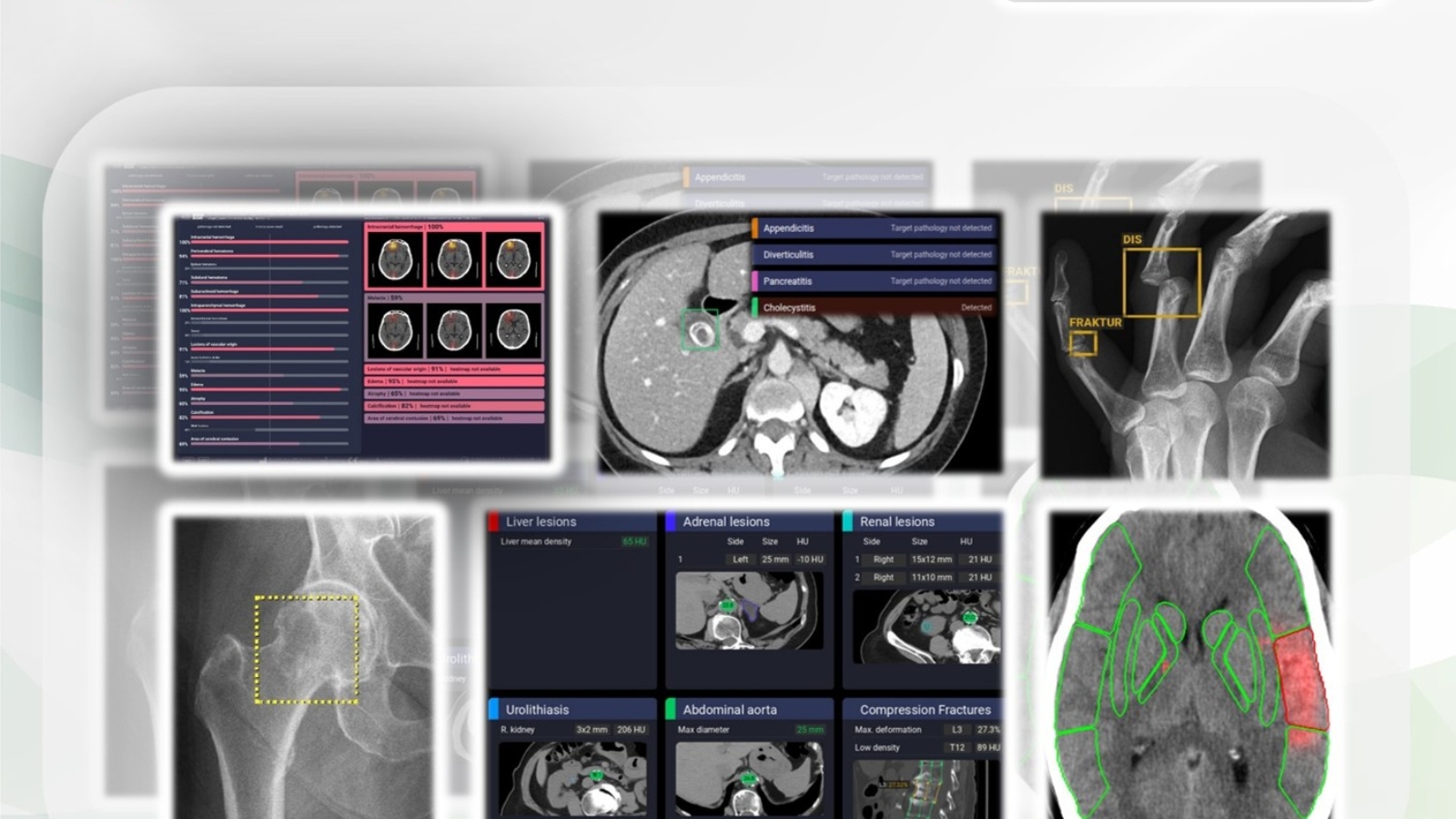
Non-enhanced abdominal CT of a 51-year-old patient with right flank pain. A kidney stone approximately 11 mm in diameter is present in the right renal pelvis (left). Mild renal congestion is evident on the right side without a fornix rupture. xAID Abdomen detects the calculus and accurately reports the morphological data (middle). Furthermore, a cyst of the right kidney, the normal width of the abdominal aorta, and a slight height reduction of the L5 vertebral body are detected (right). A liver lesion was detected, but is nonspecific on the non-enhanced CT of the abdomen (not shown).

Flank pain is one of the most common reasons for emergency room visits, and nephrolithiasis is the most common cause. The incidence in Europe and the USA is approximately 0.5% (500/100,000 population) per year. The lifetime risk of the disease is 10 to 15%. Patients with stones have a 10-year recurrence risk of approximately 50%. More than one in five patients will experience three or more recurrences in their lifetime. Computed tomography is already the gold standard for diagnosing nephrolithiasis. It has a sensitivity and specificity of approximately 96% each. But is there anything better? There is!

It is with great pleasure that we present xAID Abdomen, an AI assistant for the detection of nephrolithiasis in CT studies.

Why xAID Abdomen matters  and how it works

The AI ​​assistant detects radiopaque urinary stones, excluding genuine bladder stones. The results are clearly structured in text and images. The time to diagnosis is significantly reduced and the interdisciplinary case discussions improve in quality.

Who benefits

Patients, clinicians and radiologists through the detailed presentation and diagnosis of nephrolithiasis with meaningful data and images.

Our own experience at Radailogy

Even if renal calculi smaller than 5 mm are clinically insignificant, the visualization of even smaller stones with xAID Abdomen is valuable. In our sample, the TP, TN, FP, and TN values ​​were excellent, with an accuracy greater than 98%. xAID Abdomen also detects ectasias and aneurysms of the abdominal aorta, as well as fractures of the lumbar vertebrae on non-enhanced abdominal CT scans. For the latter, the AI ​​assistant provides a fairly accurate assessment of the age and a description of the extent of the fractures. xAID Abdomen also detects adrenal adenomas with high reliability. Liver and kidney lesions are also reported. Not least because the latter lesions are the subject of contrast-enhanced CT, we currently recommend the use of xAID Abdomen especially for the detection of nephrolithiasis. Here, the AI ​​assistant delivers high precision. xAID Abdomen can be used for each individual patient by quickly and easily uploading non-enhanced CT studies of the abdomen to Radailogy. Our teleradiology customers also use this AI assistant as a standard in daily practice to optimize their workflow in the emergency setting.

The scientific evidence

Langkvist M, Jendeberg J, Thunberg P, Loutfi A, Liden M. Computer-aided detection of ureteral stones in thin-slice computed tomography volumes using Convolutional Neural Networks. Comput Biol Med. 2018;97:153–160

De Perrot T, Hofmeister J, Burgermeister S, et al. Differentiating kidney stones from phleboliths in unenhanced low-dose computed tomography using radiomics and machine learning. Eur Radiol. 2019;29(9):4776–4782

Data to upload to Radailogy

Non-enhanced abdominal CT studies of any CT scanner for patients aged 18 and older; axial reformations; dose rate minimum 2mA; maximal slice thickness 3 mm; soft tissue reconstruction kernel